Urban commuters need a lock they can trust every single day. The it do more than secure a frame to a rack—they balance security, portability, speed, and ease of use during busy routines. Whether you leave your bike outside an office, train station, café, or apartment building, choosing the right lock can reduce theft risk dramatically.
Table of Contents
- Why the Best Bike Locks for Urban Commuting Matter
- Types of Locks: Which Option Fits City Riders?
- U-locks
- Chain locks
- Folding locks
- Cable locks
- Key Features to Look for Before You Buy
- 1. Security rating
- 2. Shackle or chain thickness
- 3. Locking mechanism quality
- 4. Portability
- 5. Weather resistance
- 6. Size and fit
- 7. Secondary security options
- Top Recommendations by Use Case
- Best overall for most commuters: high-security U-lock
- Best for high-theft neighborhoods: hardened chain lock
- Best for convenience and compact carry: premium folding lock
- Best two-lock setup: U-lock plus cable or mini secondary lock
- Best for e-bike commuters: heavy-duty lock with insurance support
- How to Use Bike Locks Correctly in the City
- Common Mistakes to Avoid When Choosing a Lock
- FAQ: Best Bike Locks for Urban Commuting
- What type of lock is best for city commuting?
- Are folding locks secure enough for urban use?
- Should I use two locks on my commuter bike?
- Is a chain lock better than a U-lock?
- How much should I spend on a commuter bike lock?
- Can I leave my bike locked outside all day?
- Conclusion
In crowded cities, bike thieves often look for the fastest and easiest target. That is why the this are usually the ones that combine hardened materials, smart locking design, and practical everyday carry options. In this guide, you’ll learn what makes a lock effective, which types work best for city riding, what features matter most, and how to choose the right model for your route, parking habits, and budget.
Why the Best Bike Locks for Urban Commuting Matter
If you ride daily in a city, your bike is exposed to more theft risk than a weekend recreational bike stored mostly indoors. High foot traffic, predictable parking patterns, and long workday lockups all make urban bicycles attractive targets. The these are designed to slow thieves down, increase effort, and discourage quick attacks with hand tools.
A weak lock can fail in seconds. Cable-only options, for example, are often lightweight and cheap, but many can be cut quickly. By contrast, stronger designs such as U-locks and heavy-duty chains offer far better resistance. When evaluating the they, the first question is not convenience alone—it is how much attack resistance the lock provides in real-world conditions.
Another reason lock choice matters is insurance and replacement cost. Commuter bikes often carry added value through racks, lights, fenders, panniers, and e-bike components. Losing a bike may also mean losing your main transportation method. The the concept help protect not just the bike itself, but also your routine, work schedule, and peace of mind.
City riders also need reliability. A lock must open smoothly in bad weather, resist corrosion, and remain practical enough that you actually use it every time. The strongest lock in the world is useless if it is too annoying to carry and gets left at home. That balance between security and usability is central to choosing wisely.
Types of Locks: Which Option Fits City Riders?
There is no one-size-fits-all answer, but certain lock styles consistently perform better in urban settings. When comparing the the approach, understanding each type helps you match the product to your risk level and daily habits.
U-locks
U-locks, also called D-locks, are among the most trusted choices for city riding. They use a hardened steel shackle and compact shape that limits leverage attacks. Many cyclists consider a quality U-lock the starting point for the it because it provides strong protection without becoming impossibly heavy.
The main advantage of a U-lock is security-to-weight ratio. A good model can secure the frame and rear wheel to a fixed object with relatively little bulk. Smaller U-locks are often more secure because there is less internal space for pry tools. The tradeoff is less flexibility when locking to thick poles or unusual racks.
Chain locks
Chain locks offer excellent versatility. You can wrap them around awkward anchor points, large posts, or multiple bike parts. For riders with high-value bikes or e-bikes, a hardened chain may rank among the this, especially when overnight parking is occasionally necessary.
The downside is weight. Secure chain locks can be very heavy, which may not suit riders who carry bikes upstairs or commute long distances. Still, if your route includes risky parking areas, that extra weight may be worth it.
Folding locks
Folding locks are popular because they sit between U-locks and chains. They fold into compact sections and are easy to mount on a frame. Some commuters include them among the these because they offer good portability and more locking flexibility than many U-locks.
However, security varies widely by model. Some premium folding locks perform well, while budget versions may have weaker rivets or joints. For city use, only high-quality versions should be considered.
Cable locks
Cable locks are useful as secondary security for wheels, saddles, or accessories, but rarely as a primary defense in high-risk urban environments. If a list of the they includes cable options, they should typically be framed as supplementary tools rather than standalone protection.
Key Features to Look for Before You Buy
A lock’s style matters, but its real-world performance comes down to specific features. To identify the the concept, focus on these practical buying criteria.
1. Security rating
Many reputable brands use internal or third-party ratings to indicate protection level. Look for models marketed for high-theft areas, not just casual neighborhood use. A stronger rating often means thicker steel, improved locking mechanisms, and better resistance to bolt cutters or twisting attacks.
2. Shackle or chain thickness
Thicker materials generally improve cut resistance, though design quality matters too. For urban commuting, locks with substantial hardened steel are preferable. The the approach often prioritize anti-cut performance because opportunistic thieves commonly carry compact cutting tools.
3. Locking mechanism quality
The cylinder matters as much as the body. A weak core can be picked or drilled. Premium locks often feature anti-rotation shackles, double-bolt locking, and keyways designed to resist tampering. Smooth operation is also important when you unlock several times per day.
4. Portability
Security is critical, but commuting requires practicality. A very secure lock that is miserable to carry may end up staying home. Weight, frame mounts, shape, and packability all affect daily use. The it are strong enough to deter theft while still fitting your routine.
5. Weather resistance
Rain, road grit, and winter conditions can shorten a lock’s life. Look for protective coatings, covered keyholes, and corrosion-resistant materials. If you commute year-round, weatherproofing becomes essential rather than optional.
6. Size and fit
The lock should be large enough to secure your frame to common city infrastructure but not so oversized that it creates unnecessary attack space. Smaller U-locks are often ideal for dense cities where racks are standard. Chains and folding locks can help when parking options are less predictable.
7. Secondary security options
Many commuters use two locks: one for the frame and one for a wheel or accessory. In fact, some of the this work best as part of a layered setup. A primary U-lock plus a cable or compact secondary lock can make your bike a less appealing target.
Top Recommendations by Use Case
The best bike locks for urban commuting are not identical for every rider. Your ideal choice depends on where you park, how long you leave the bike unattended, and whether you ride a standard commuter bike, road bike, cargo bike, or e-bike.
Best overall for most commuters: high-security U-lock
For many urban cyclists, a premium U-lock is the smartest all-around option. It offers strong protection, reasonable portability, and fast locking. If you park in visible public areas during the day, this is often the simplest answer. Choose one with a hardened steel shackle, double-locking design, and reliable mount.
Best for high-theft neighborhoods: hardened chain lock
If you commute into theft-prone districts or leave your bike out for extended periods, a hardened chain provides excellent flexibility and serious security. It is especially useful for larger frames, cargo bikes, and e-bikes. The extra weight is the price of confidence.
Best for convenience and compact carry: premium folding lock
A high-end folding lock suits riders who want easier storage and greater locking reach. It can be ideal for mixed commutes involving trains, elevators, or office parking rooms. Just avoid low-security versions, as convenience should not come at the expense of protection.
Best two-lock setup: U-lock plus cable or mini secondary lock
One of the smartest strategies in cities is layered security. Many cyclists believe the best bike locks for urban commuting involve combining two lock types. Use a primary U-lock on the frame and rear wheel, then add a cable or second compact lock for the front wheel. This approach increases time and effort for a thief.
Best for e-bike commuters: heavy-duty lock with insurance support
E-bikes are expensive and highly targeted. The best bike locks for urban commuting for e-bikes usually feature maximum-security ratings, thick hardened steel, and support for registered keys or anti-theft guarantees. Since e-bikes are heavier, carrying a more substantial lock is often realistic.
How to Use Bike Locks Correctly in the City
Even the best bike locks for urban commuting can fail if used poorly. Proper locking technique is just as important as the product you buy.
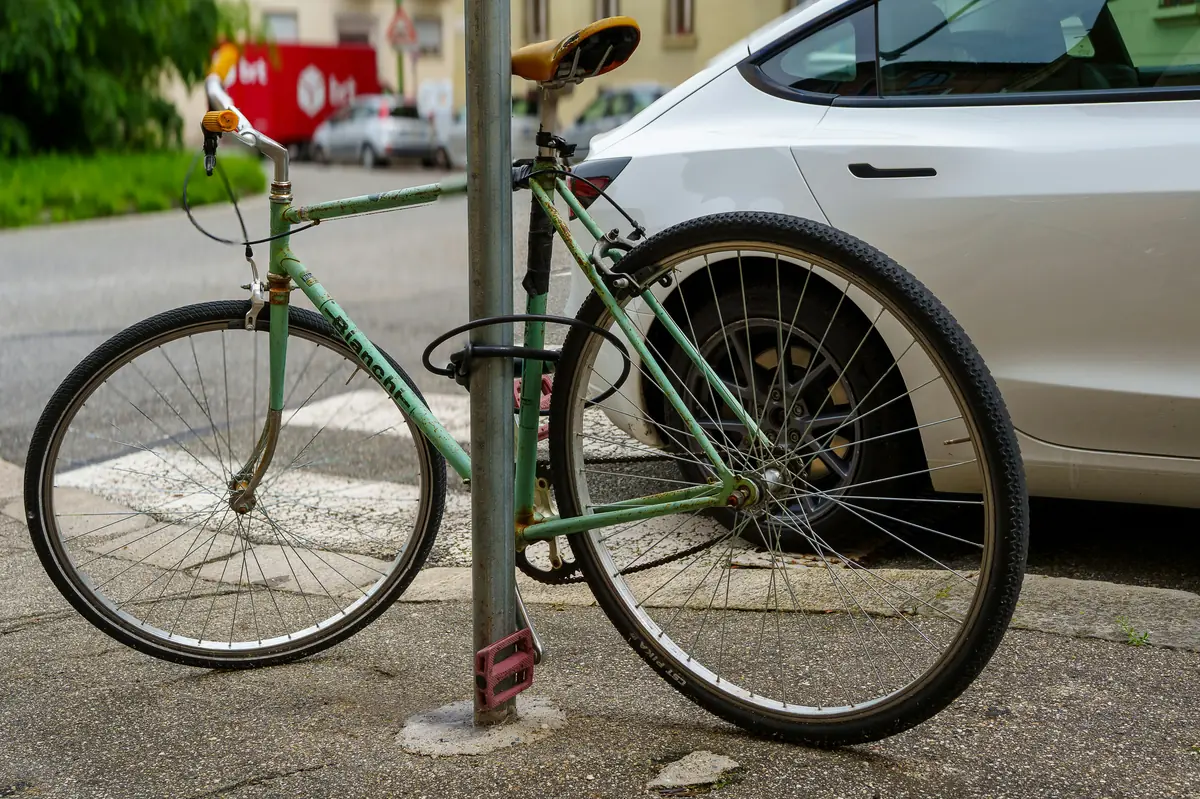
First, always lock to an immovable, fixed object. A weak signpost, loose rack, or short pole can make even a strong lock useless. Check whether the bike can be lifted over the top or whether the object can be unbolted.
Second, prioritize the frame. The lock should secure the main triangle or rear triangle to the anchor point. If possible, include a wheel. A common method is to place a U-lock around the rear wheel, frame, and rack. Then secure the front wheel with a secondary cable or lock.
Third, minimize space inside the lock. When using U-locks, smaller gaps make leverage attacks harder. Position the keyway facing downward or inward when practical to make tampering more difficult.
Fourth, choose smart parking locations. Busy, well-lit areas with frequent foot traffic are usually better than isolated corners. Try to park near better-protected bikes rather than easier targets. The best bike locks for urban commuting work best when paired with visible, strategic parking habits.
Finally, remove accessories. Lights, computers, bags, and even quick-release saddles can attract thieves. Locks protect the bike, but unsecured accessories may still disappear.
Common Mistakes to Avoid When Choosing a Lock
A lot of cyclists buy based on price or convenience alone. That can be costly later. One major mistake is assuming all locks are similar. They are not. The best bike locks for urban commuting are typically made by established brands with proven security engineering, not generic low-cost alternatives.
Another mistake is relying on one thin cable for an expensive bike. Cables are fine as secondary deterrents, but they are rarely enough for daily city parking. Underestimating urban theft risk is one of the fastest ways to lose a bike.

Some riders also buy oversized locks. Bigger is not always better. More internal space can make prying easier, and larger locks often weigh more without adding proportionate protection. Fit matters.
Ignoring key replacement options is another problem. If you commute every day, losing a lock key can create serious inconvenience. Look for brands with key registration or replacement programs.
Lastly, do not forget long-term value. Spending more upfront on one of the best bike locks for urban commuting is usually cheaper than replacing a stolen bike, damaged accessories, and lost transport time.
FAQ: Best Bike Locks for Urban Commuting
What type of lock is best for city commuting?
For most riders, a high-quality U-lock is the best starting point. The best bike locks for urban commuting usually include premium U-locks because they offer an excellent mix of security, weight, and daily practicality. In higher-risk areas, adding a second lock is even better.
Are folding locks secure enough for urban use?
Some are, but quality matters a lot. The best bike locks for urban commuting in folding form come from reputable brands with strong joint construction and high security ratings. Budget folding locks may be convenient, but they are not always suitable for high-theft zones.
Should I use two locks on my commuter bike?
Yes, if theft risk is moderate to high. Many cyclists find that the best bike locks for urban commuting are part of a two-lock strategy: a primary U-lock or chain for the frame and a secondary cable or compact lock for the front wheel or accessories.
Is a chain lock better than a U-lock?
It depends on your parking situation. Chain locks are more flexible and can be extremely secure, but they are heavier. U-locks are usually easier to carry and still very strong. The best bike locks for urban commuting vary based on whether you prioritize portability or maximum locking versatility.
How much should I spend on a commuter bike lock?
A good rule is to spend enough to match your bike’s value and your city’s theft risk. The best bike locks for urban commuting are rarely the cheapest options. Investing in a well-reviewed, high-security model is usually the smarter long-term decision.
Can I leave my bike locked outside all day?
Yes, but use caution. The best bike locks for urban commuting help reduce theft risk during work hours, especially when combined with proper locking technique and smart parking choices. If you regularly leave a bike out for long periods, choose a higher-security lock and consider using two locks.
Conclusion
Choosing the right lock is one of the most important decisions a city cyclist can make. The best bike locks for urban commuting combine strong materials, reliable locking mechanisms, manageable weight, and practical everyday usability. For most riders, a premium U-lock offers the best balance, while chain and folding locks can be better for specific situations.
Ultimately, the best bike locks for urban commuting are the ones that match your bike’s value, your neighborhood’s theft risk, and your daily routine. Pair a strong lock with smart parking habits, correct locking technique, and a layered security approach. Do that consistently, and your commuter bike will be much better protected in the urban environment.